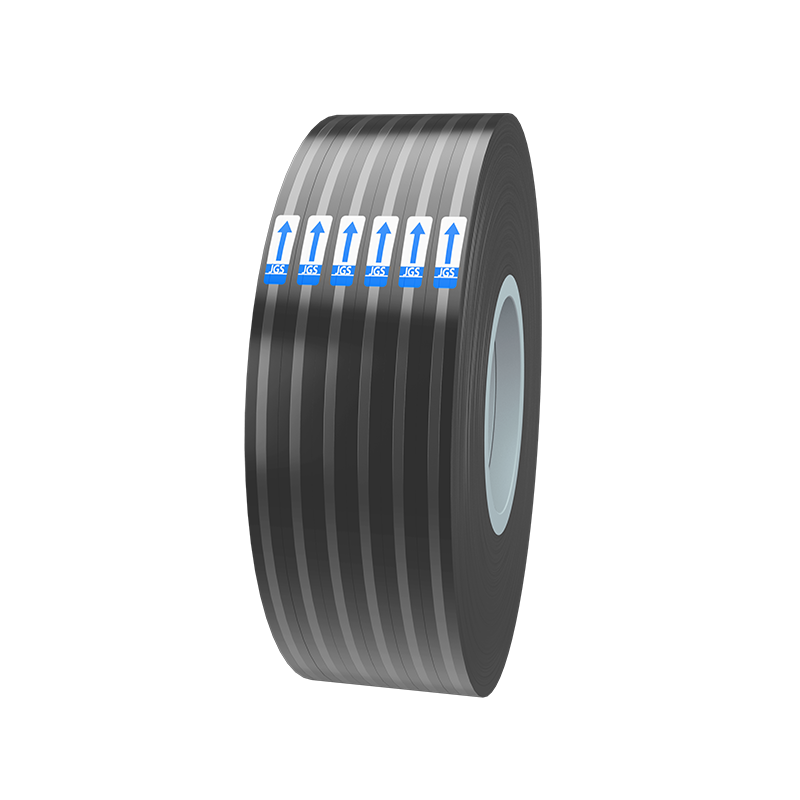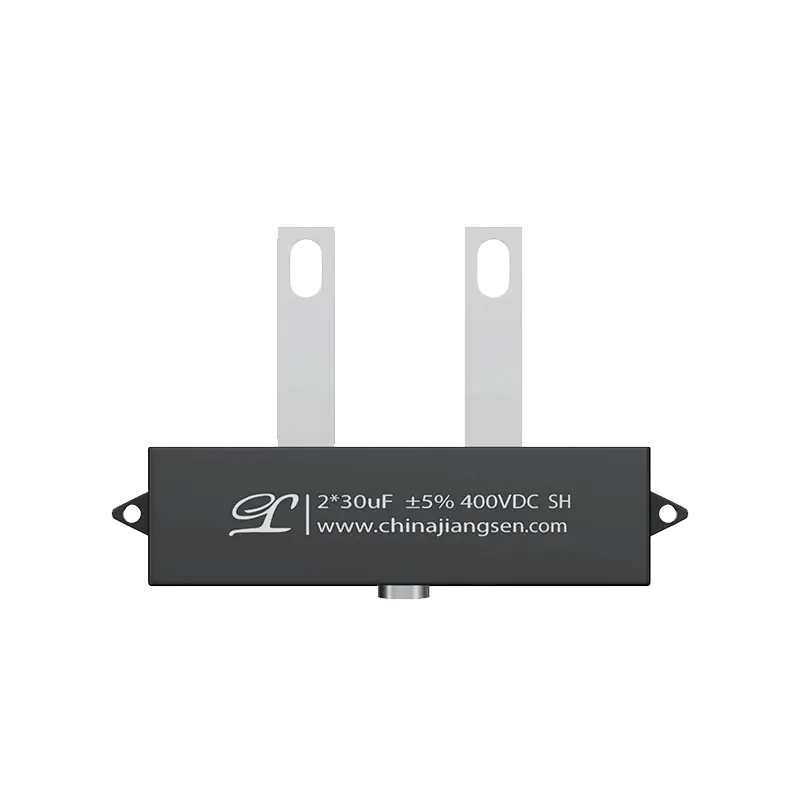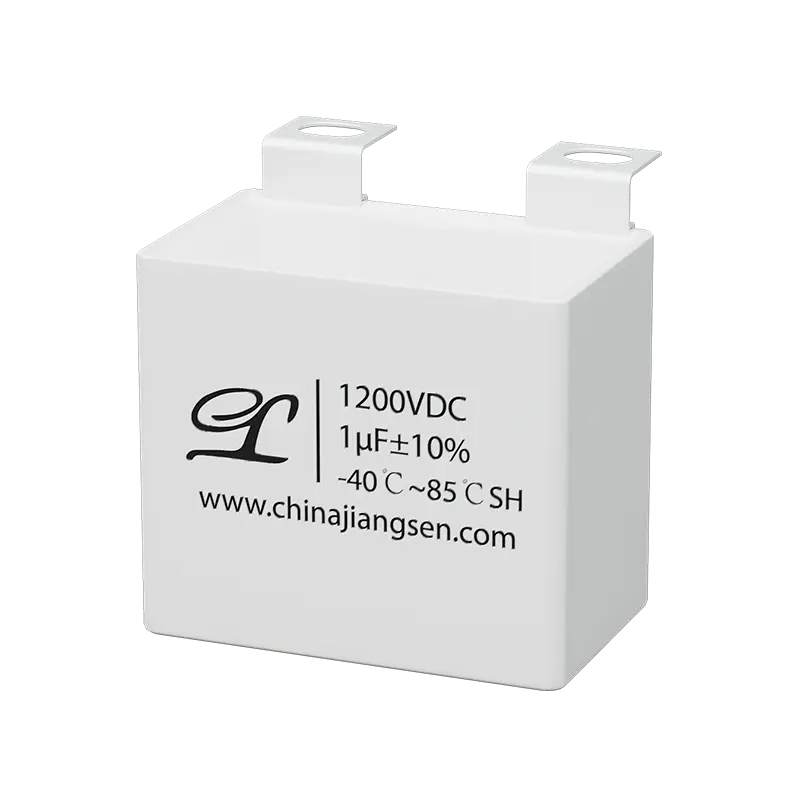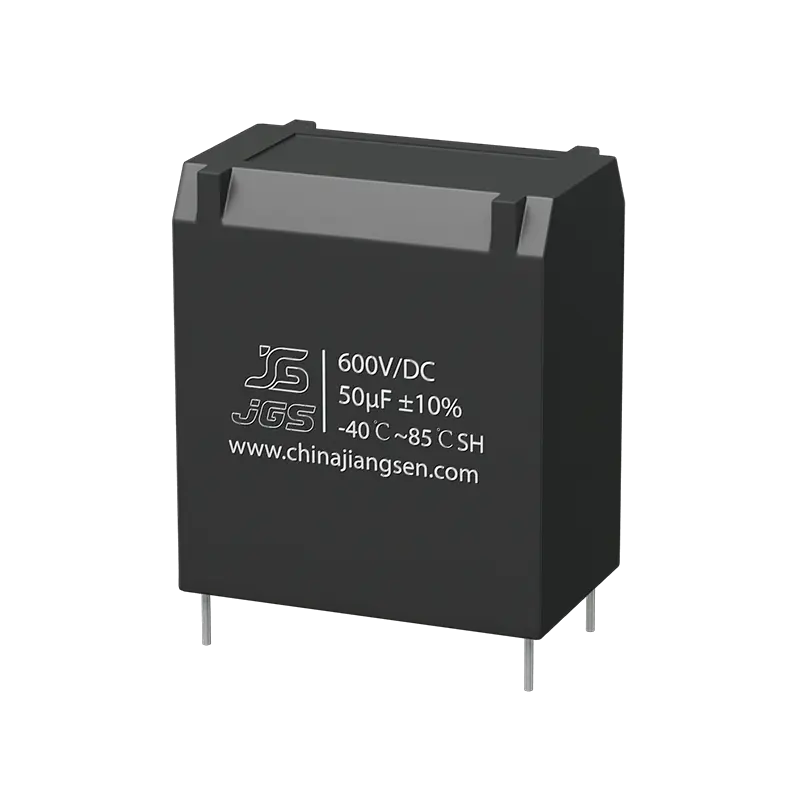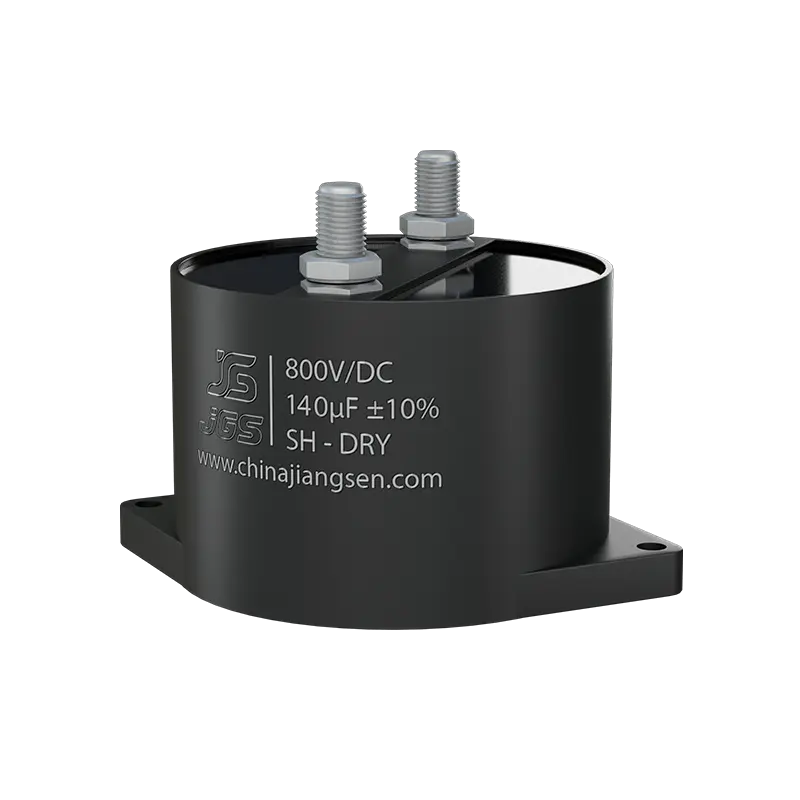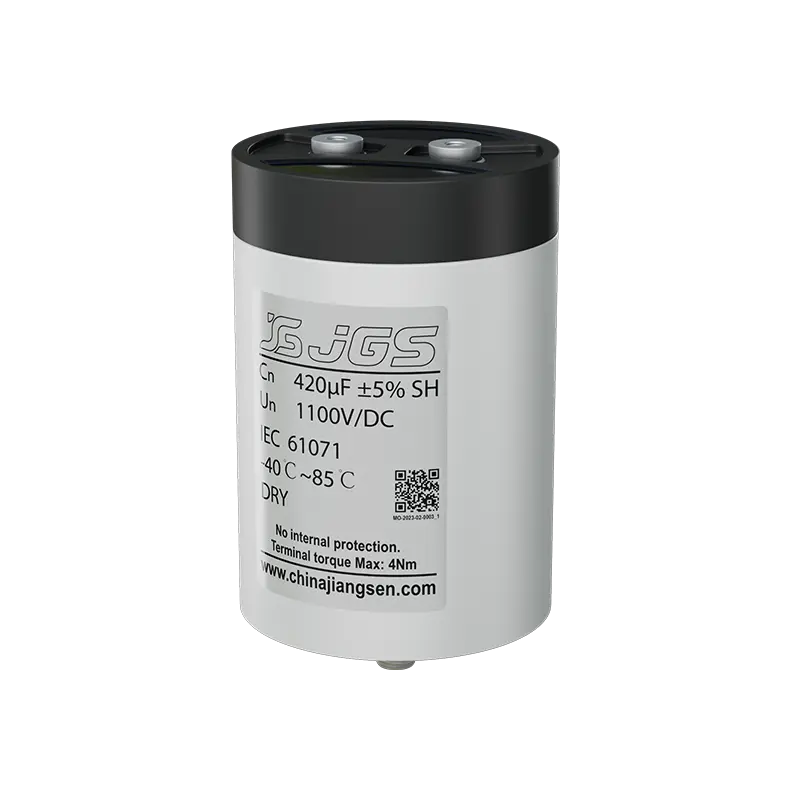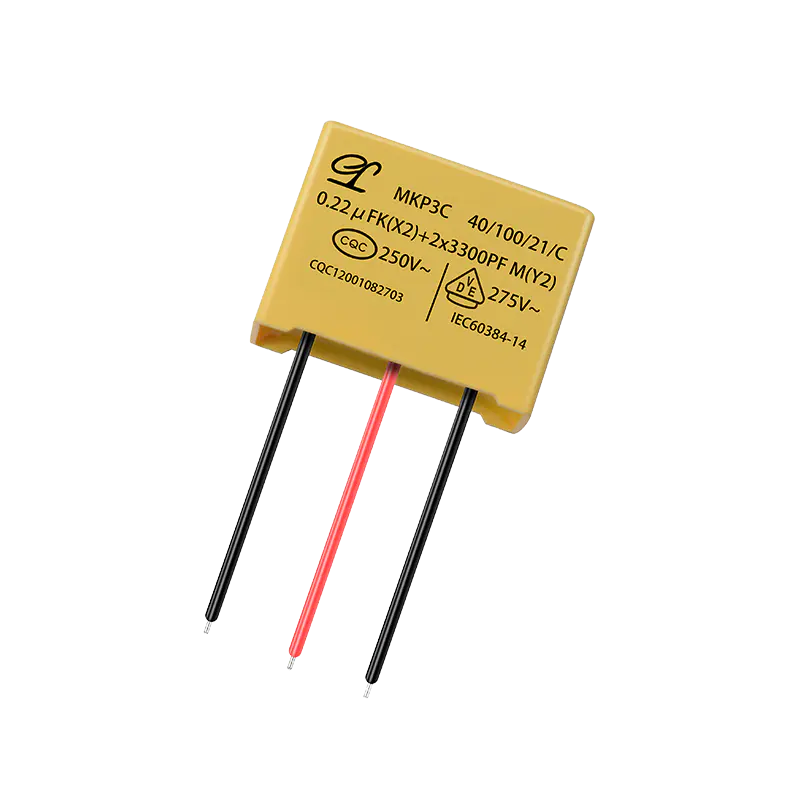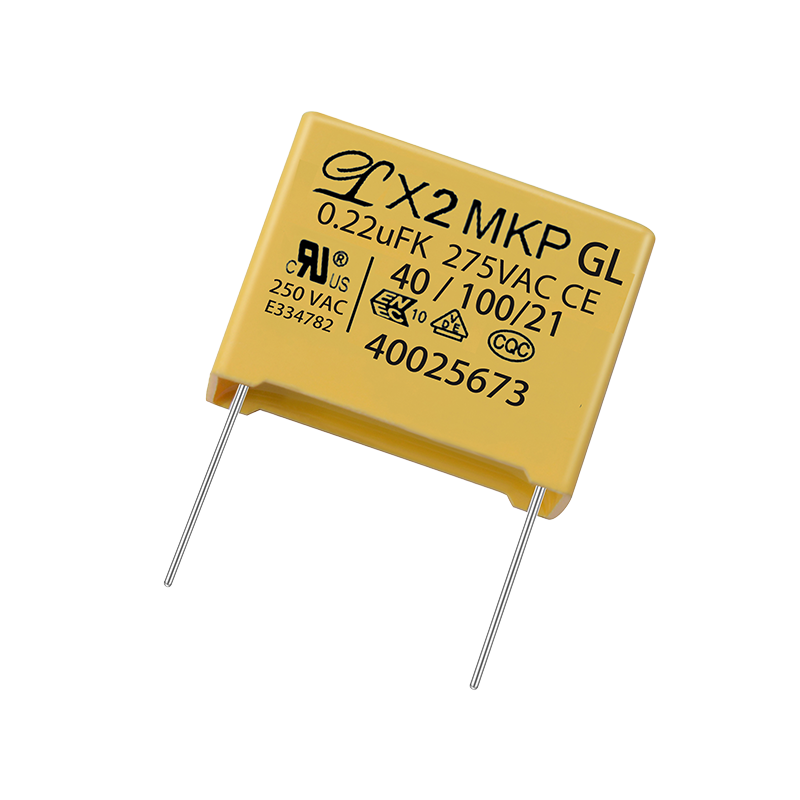
The core of a metalized film capacitor consists of a polymer dielectric such as polyester or polypropylene, coated with a thin metal film (aluminum or zinc). Unlike electrolytic capacitors, the metallized film serves as both electrode and dielectric.
Precision winding and packaging allow high capacitance in a compact, lightweight design. The self-healing property vaporizes defective areas, preventing short circuits and enhancing reliability in high-frequency or pulsed environments.
Dielectric choice is critical: polypropylene offers low dielectric loss and high insulation for high-frequency applications, while polyester balances voltage resistance and cost for industrial use.
Metallization layer thickness affects performance—too thick reduces self-healing, too thin lowers capacitance. Advanced vapor deposition ensures high stability and long lifespan under high voltage or pulse stress.
Low ESR and ESL provide fast response for high-frequency signals and pulsed environments. Wide temperature tolerance and low dielectric loss maintain stable capacitance over long-term operation.
In high-voltage or pulse applications, self-healing extends lifespan, preventing rapid performance degradation and enhancing system reliability.
Encapsulation with epoxy or vacuum protects against humidity, corrosion, and mechanical stress, improving temperature tolerance and vibration resistance.
Multi-layered stacked structures and precision winding enhance voltage withstand capability and stable operation in harsh conditions.
Metalized film capacitors are ideal for power supply filtering, signal coupling, pulse shaping, power factor correction, and high-frequency transducers. Their high reliability, low loss, and self-healing significantly improve system lifespan and stability.
Compared to electrolytic capacitors, they excel in frequency response, high-temperature performance, and long-term reliability, critical for industrial control, communication equipment, and new energy vehicles.
Ongoing improvements in polymer dielectrics, thin-film metallization, packaging, and intelligent manufacturing enhance capacitance, voltage withstand, and reliability while reducing size and losses.
These capacitors are now suitable for emerging high-performance applications like new energy, 5G, and power electronics, ensuring stable and efficient device operation.
A1: Low loss, high-frequency performance, long lifespan, and self-healing make them ideal for high-temperature or pulsed environments.
A2: When a local breakdown occurs, the metallization layer vaporizes, forming an open circuit and preventing short-circuit propagation.
A3: Polypropylene for low loss and high-frequency performance, polyester for voltage stability and lower cost.
A4: Packaging protects against humidity, corrosion, and mechanical shock, improving temperature resistance, voltage withstand, and lifespan.
A5: High-reliability applications like power supply filtering, signal coupling, pulse shaping, power factor correction, and high-frequency transducers.

© 2010-2024 www.chinajiangsen.com All rights reserved.
Privacy Policy
增值电信业务经营许可证 苏ICP备12026789号-1



 Español
 简体中文
简体中文